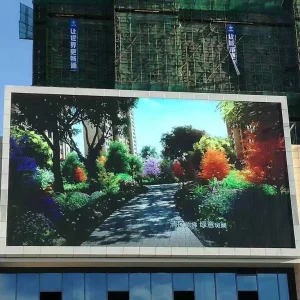
High-performance, low-power optoelectronic solutions designed to optimize operational efficiency and minimize carbon footprint.

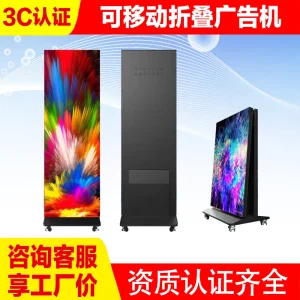
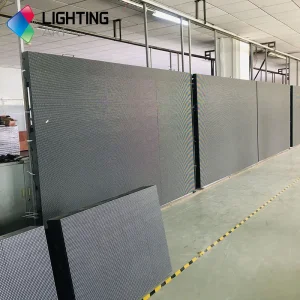
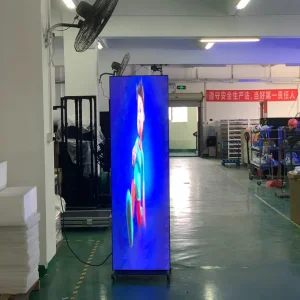
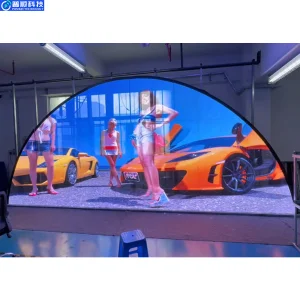
In the contemporary digital-first corporate ecosystem, visual display networks have evolved into the primary interface between enterprises and their target audiences. However, the unchecked expansion of Digital Out-Of-Home (DOOH) networks, smart city interfaces, and sprawling command center video walls has created an unprecedented demand for grid energy. According to recent industrial energy audits, display systems can account for up to 35% of an commercial building's digital asset utility footprint.
For procurement officers, system integrators, and sustainability executives, the selection of display hardware manufacturers is no longer merely a calculation of peak brightness and pixel pitch. It is a strategic alignment with international sustainability mandates such as Europe's Energy-related Products (ErP) Directive and global ESG (Environmental, Social, and Governance) disclosure frameworks. Selecting a vendor who integrates energy-efficient architectures—such as common-cathode power distribution, advanced chip packaging, and automated thermal throttling—is paramount to mitigating long-term operational expenditures (OpEx) and Scope 2 carbon emissions.
"Energy efficiency in large-scale visual displays is no longer an optional green badge—it is a functional economic driver. Transitioning from standard common-anode SMD architectures to common-cathode COB micro-display systems reduces grid consumption by up to 40% while doubling operational lifespan."
This comprehensive industry analysis presents the structural characteristics of the leading global manufacturers pioneering high-efficiency displays. Additionally, we analyze the integration dynamics of modern solid-state display architectures, the logistics advantages of the Chinese electronics supply chain, and local optimization strategies for international buyers.
Analyzing market leaders across solid-state, inorganic LED, and organic optoelectronic display technologies.
An industry-leading Chinese developer specializing in high-performance common-cathode LED display architecture. Renowned for custom configurations, rigorous environmental testing, and highly integrated thermal dissipation cabinet designs.
A global giant in visual display technology, leading the commercialization of fine-pitch MicroLED panels. Their proprietary power-saving driver IC designs dramatically reduce idle power consumption.
Distinguished by a massive smart manufacturing infrastructure. Unilumin produces high-efficiency indoor and outdoor screens using automated robotic assembly to ensure optimal luminous efficacy per watt.
Renowned for its global export footprint and stringent product certification protocols. Absen's commercial displays leverage smart power supplies that adjust input voltage dynamically based on thermal limits.
Pioneers of the active-matrix MicroLED ("The Wall") and Quantum Dot technology. Samsung focuses on pixel-level energy modulation, which ensures dark areas consume zero power, yielding ultra-high contrast ratio.
Leaders in flexible organic self-lit systems (OLED) and energy-star rated commercial signage. Their advanced backplane architectures reduce parasitic capacitance and power leakages.
A premier developer based in Europe, addressing high-end rental, medical, and control room visualization. Their systems integrate premium hardware-level energy balancing modules.
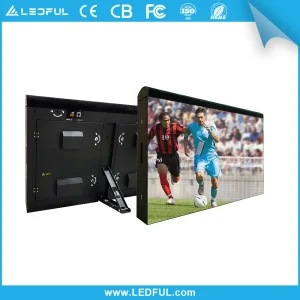
The leading American manufacturer for large-scale sports venue video systems and digital billboards. Their specialized pixel layouts optimize the viewing angle while minimizing power draw per candela.
Pioneered Crystal LED display engineering. Utilizing micro-sized LEDs in a unique arrangement, their displays yield near-perfect black levels, restricting electrical drive to active emission areas.
Exploring LUMIVIS' advanced production capacity, manufacturing optimization, and structural quality control systems.
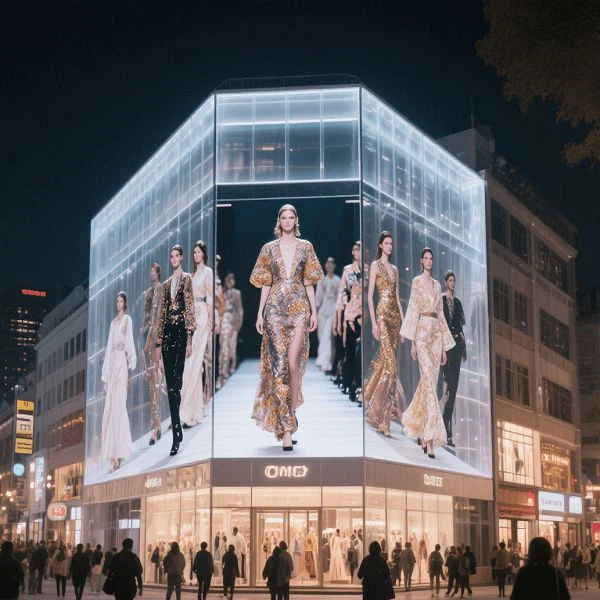
Strategically situated in Shenzhen, the global epicenter of optoelectronic innovation, Shenzhen Aras LED Co., Ltd. (operating internationally under the brand LUMIVIS) manages a highly vertically integrated manufacturing environment. The facility is equipped with automated SMT (Surface Mount Technology) assembly systems, robotic PCB mounting infrastructure, and high-speed multi-axis pick-and-place lines.
By keeping module assembly, cabinet fabrication, and thermal design testing under a single quality control system, LUMIVIS avoids supply chain delays and ensures consistent quality control. This operational alignment enables a rapid production cycle, providing B2B buyers with turnaround times of 1-10 workdays, even for large custom orders.
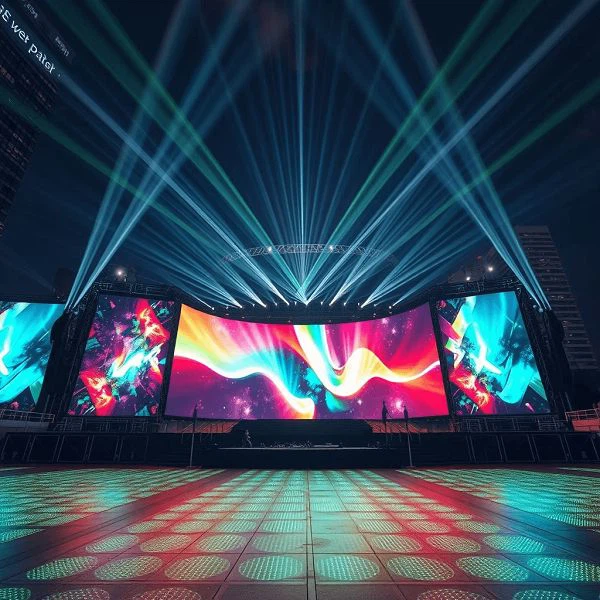
LUMIVIS relies on strict verification protocols to guarantee long-term stability and energy efficiency across all environmental classes:
Decarbonizing displays requires a multi-faceted engineering approach spanning semiconductor architecture, electrical distribution, and optical efficiency.
Traditional LED systems employ a common-anode architecture, where the red, green, and blue LED chips share a single positive voltage rail (typically 5V). Because Red LEDs only require approximately 2.8V to operate, the excess 2.2V is dissipated across the driver IC as heat waste.
A common-cathode configuration separates the power supply rails, feeding 2.8V directly to the Red diode and 3.8V to the Green and Blue diodes. By matching input voltage to each diode's bandgap voltage, system designers can reduce overall power consumption by 30% to 40% and lower operating temperatures by up to 15°C, reducing the need for active cooling fans.
Surface Mount Device (SMD) packaging encapsulates LED dies in plastic housings, which are then soldered to the PCB. This adds thermal resistance. COB (Chip-on-Board) technology mounts the bare semiconductor dies directly on the substrate. This direct contact drastically reduces thermal resistance, allowing heat to escape to the rear heatsink more effectively.
Lower junction temperatures increase the luminous efficacy of the diodes (lumens per watt) and prevent thermal droop—where LED efficiency degrades as the temperature rises. This makes COB displays a highly efficient choice for fine-pitch indoor setups.
Standard LED chips use wire bonds to connect the top electrode to the substrate, which can block light and add electrical resistance. Flip-chip technology flips the diode upside down, placing the contacts directly against the substrate.
This design eliminates wire bonding, increases the light-emitting area, and improves heat dissipation. Flip-chip displays can achieve the same brightness as wire-bonded displays while drawing significantly less current.
Modern high-efficiency displays utilize smart driver ICs featuring low-power standby modes and automated pulse-width modulation (PWM) control. When displaying dark content, the driver IC reduces active power to those pixels.
Additionally, integrated light sensors monitor ambient lux levels and dynamically adjust the display brightness. This ensures optimal readability during the day and dims the display at night, saving energy and preventing light pollution.
Adapting display technology to meet localized environmental conditions, operational profiles, and structural demands.
Outdoor displays operating in high-temperature environments (such as parts of North America or the Middle East) face solar heating challenges. Deploying common-cathode displays with IP65+ ingress protection reduces the need for energy-intensive external air conditioning systems.
Mission-critical control rooms require 24/7 reliability and comfortable viewing for operators. Utilizing fine-pitch COB displays with low-power driver ICs minimizes heat generation, allowing silent, fanless operation while keeping displays comfortable to work near.
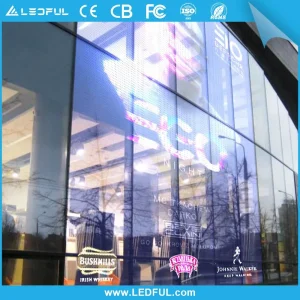
Transparent LED glass walls and QLED screens allow architects to blend displays into building facades. Low-draw transparent displays utilize high-translucency PCBs to maximize natural light entry, minimizing indoor artificial lighting costs.
The global dominance of Chinese display manufacturers is built on more than simple labor cost advantages. It is sustained by a highly integrated industrial cluster in the Pearl River Delta, particularly in Shenzhen. This ecosystem brings together semiconductor suppliers, driver IC design firms, high-speed SMT assembly plants, and global logistics networks in one area.
This proximity allows manufacturers like LUMIVIS to source raw materials, design custom multi-layer PCBs, and run them through high-speed SMT lines in days rather than weeks. This tight integration keeps supply lines moving and shortens design cycles, allowing custom modifications to be delivered with minimal lead times.
For B2B buyers, this localized supply chain structure offers distinct advantages:
Navigating certification paths, safety standards, and local integration services for global projects.
High-power LED displays can generate electromagnetic interference. Leading manufacturers comply with Class A & Class B limits under FCC Part 15 and Europe’s EMC Directive, ensuring displays operate without disrupting local wireless and IT infrastructure.
Outdoor displays require robust protection against water and particulate ingress. Adhering to standards like IEC 60529 (IP65/IP66 ratings) ensures long-term display reliability and safeguards internal electronics from humidity and dust.
Meeting Energy Star specifications and Europe’s Eco-design rules requires displays to maintain high conversion efficiency in their power supplies (typically >90% at half load) and feature low-power standby modes (<0.5W).
Addressing common engineering and procurement questions about low-power, high-performance display technologies.
Typically, common-cathode power distribution reduces power consumption by 30% to 40%. The exact savings depend on the color profile of the content being displayed. Since Red sub-pixels run at a native 2.8V rail instead of being stepped down from 5V, displaying content with high red or warm tones yields the highest relative energy savings.
COB packaging mounts semiconductor dies directly to the PCB substrate, bypassing the plastic cup and wire bonds of standard SMD designs. This direct physical path significantly lowers thermal resistance, keeping the diode junction temperature cooler. Cooler operating temperatures delay color shifting, prevent dimming, and extend the display's lifespan to over 100,000 hours.
Shenzhen Aras LED maintains a standard manufacturing lead time of 1-10 workdays for most orders. This speed is made possible by their in-house module assembly, cabinet fabrication, and automated testing lines. Lead times can vary slightly depending on custom pixel pitches, non-standard mechanical frames, or specialized driver requirements.
Generally, no. Low-power displays use standard AC power feeds (110V/220V) and convert power using high-efficiency internal switching power supplies. In fact, because these displays draw less maximum current, project installations often save on infrastructure costs by requiring fewer breaker panels and thinner power lines.
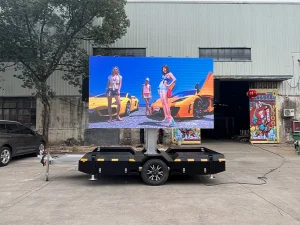
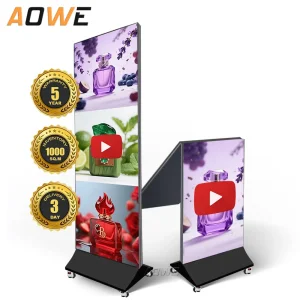
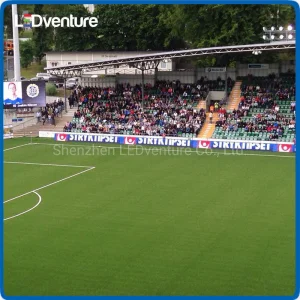
Explore our wider catalog of high-efficiency visual products tailored for retail, sports, and outdoor digital advertising.
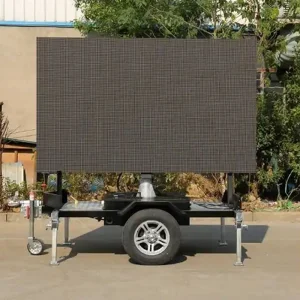
 Aras LED