High-reliability indoor displays designed specifically for coastal exposure, meeting the stringent engineering criteria of Malabo and Bata.
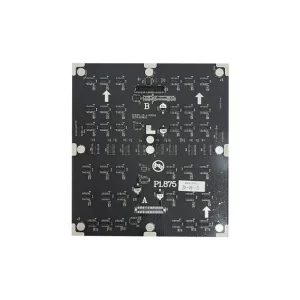
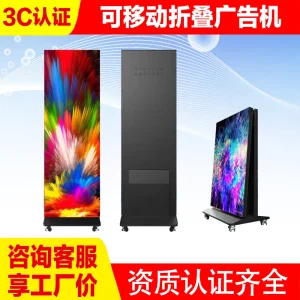
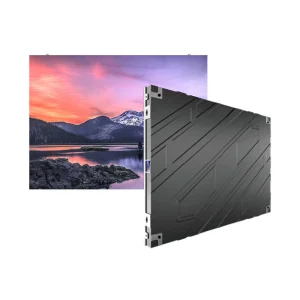
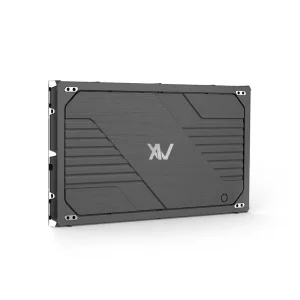
Equatorial Guinea's ongoing structural transformation, guided by its national development plan, is accelerating infrastructure modernization in key urban hubs including Malabo, Bata, and the rising administrative center of Ciudad de la Paz (Oyala). As government agencies, multinational energy providers, and high-end hospitality projects look to establish world-class communication infrastructure, the demand for advanced digital displays is growing.
However, West African maritime regions present distinct environmental challenges that degrade standard commercial electronics. In cities like Malabo (on Bioko Island) and the coastal city of Bata, relative humidity levels consistently hover between 80% and 90%, accompanied by ambient salt-spray exposure. Standard Surface Mounted Device (SMD) LED screens often suffer from cathode/anode oxidation and epoxy degradation in these conditions, leading to early pixel failure and high repair costs.
"For tropical maritime climates, standard encapsulation is no longer viable. MicroLED utilizing Chip-on-Board (COB) structure encapsulates individual micro-diodes directly onto the PCB substrate, creating an impermeable barrier against humidity, saline air, and physical impact."
When specifying displays for high-stakes installations, it is crucial to understand the engineering trade-offs between Chip-on-Board (COB) and MicroLED-in-Package (MIP) configurations:
COB represents the pinnacle of physical and environmental protection. By mounting bare LED chips directly onto the board and sealing the assembly with optical resin, the screen achieves a completely smooth, durable surface. This surface is highly resistant to impacts (such as collisions in public spaces) and prevents moisture penetration.
MIP splits micro-pixels into discrete sub-pixel packages before surface mounting. While this makes custom panel configurations highly flexible and keeps production yields cost-effective, it maintains structural boundaries that require careful sealing when deployed in humid environments.
| Parameters | Standard SMD Display | MIP MicroLED Display | COB MicroLED Display |
|---|---|---|---|
| Pixel Pitch Range | >1.2mm | 0.6mm - 1.5mm | 0.4mm - 1.8mm |
| Relative Humidity Resistance | Low (Risk of short circuits) | Medium-High | Excellent (IP65 front-sealed) |
| Mechanical Protection | Delicate (Frequent diode loss) | Moderate | High (Anti-collision, anti-static) |
| Thermal Dissipation Efficiency | Standard | Advanced | Superior (Direct-to-substrate) |
Exporting complex commercial technology into Central Africa requires detailed compliance and logistics management. LUMIVIS coordinates closely with our logistics partners to guarantee smooth transit and installation across the region:
Customs Clearance and SGS Inspections: Imported goods destined for Malabo or Bata are subject to pre-shipment inspections and require compliant documentation to navigate CEMAC (Economic and Monetary Community of Central Africa) import tariffs. Our global logistics team prepares all necessary certificates of conformity, including CE, FCC, and RoHS, along with verified customs declarations, to prevent port delays.
Supply Chain Security & Transit: Displays are shipped in maritime-grade, anti-vibration flight cases with silica gel desiccant packs. This maintains moisture control throughout ocean freight transit, from the port of Shenzhen directly to the ports of Malabo or Bata.
Shenzhen Aras LED Co., Ltd. operates a specialized production facility in Shenzhen, China. Our facilities feature cleanroom assembly environments and automated testing equipment.
Our quality control workflow includes:
LUMIVIS provides comprehensive engineering services, from initial physical design to site-level integration:
Custom Frame Engineering: Designing structural frames to accommodate building expansion, electrical conduit pathways, and clean airflow management.
Electrical Architecture: Utilizing redundant power supplies and transient voltage surge suppression to protect the screen against power supply fluctuations.
Versatile indoor and outdoor options designed for commercial projects, corporate campuses, and command centers across Equatorial Guinea.
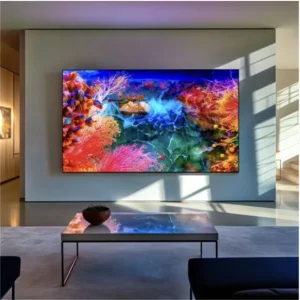
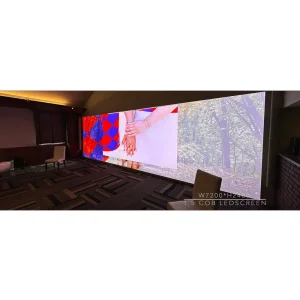
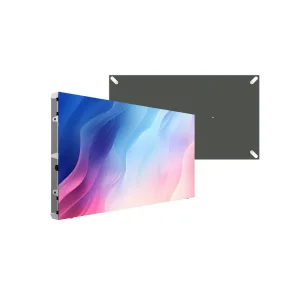
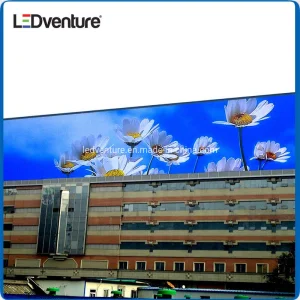
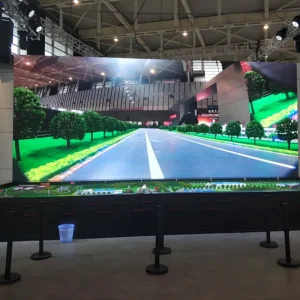
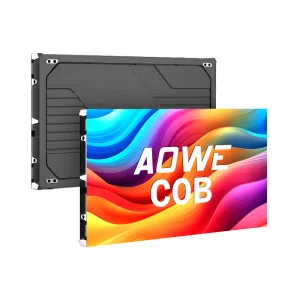
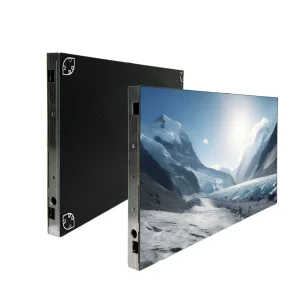
Our cleanroom manufacturing facility in Shenzhen features automated assembly lines to minimize human handling error. By maintaining complete control over our production, we can ensure consistent quality from single-unit orders to large-scale projects.
Every screen undergoes a rigorous verification cycle: color calibration using advanced spectroradiometers, mechanical fit checks to ensure seamless panel tiling, and electrical testing designed to identify any potential issues before delivery.
Power supply stability can vary across Sub-Saharan electrical grids. To protect your investment, LUMIVIS systems are designed with the following power engineering specifications:
Key considerations for engineering, importing, and installing MicroLED display technology in Central Africa.
Malabo and Bata experience relative humidity levels of up to 90% and high ambient salt levels due to their coastal geography. Standard SMD displays expose their electrical leads directly to the air, which can lead to moisture damage and corrosion. COB (Chip-on-Board) encapsulation covers the entire board surface with an optical resin. This protects the light-emitting diodes from humidity, salt-spray, physical impacts, and static electricity.
Our standard production lead time is 1 to 10 working days, depending on project scale and configuration. Transit time via maritime freight from Shenzhen to the Port of Malabo or Port of Bata typically ranges from 35 to 45 days. We coordinate pre-shipment inspections (such as SGS or Intertek) to ensure smooth clearance through customs.
Yes. All LUMIVIS MicroLED products are manufactured to meet CE, FCC, and RoHS standards. We provide verified bills of lading, detailed packing lists, commercial invoices, and certificates of origin to simplify customs clearance within the CEMAC zone.
Yes. We design and manufacture custom structures, cabinets, and pixel configurations to meet your project's specific physical and aesthetic requirements. Contact our engineering department during the design phase to coordinate structural requirements.
We provide diagnostic tools and direct remote engineering support to assist local technical teams. For large-scale installations, we can arrange for factory engineers to travel to the site to assist with system calibration and commissioning.
Connect with our engineering and logistics specialists to design a resilient display solution for your project.
 Aras LED