The global demand for Ultra-High Definition (UHD) LED Displays has transitioned from luxury installation to core commercial infrastructure. Enterprises worldwide, spanning banking, corporate operations, smart transportation, and retail, require high-fidelity visualization systems to process data, captivate consumers, and run critical operations.
In Europe, the Middle East, and North America, regulatory standards like the CE (Conformité Européenne) mark are not optional. CE compliance certifies that displays meet rigorous health, safety, and environmental protection standards. It ensures that large-scale LED deployments operate safely under EMC (Electromagnetic Compatibility) limits and LVD (Low Voltage Directives), shielding businesses from catastrophic system interference and operational liabilities.
Mandatory compliance with CE, RoHS, and FCC ensures system safety, low emission parameters, and environmental sustainability.
From P1.56 down to sub-millimeter pitches, high contrast ratios and rapid refresh rates are redefining critical data monitoring environments.
Operating from Shenzhen, the global capital of optoelectronic manufacturing, Shenzhen Aras LED Co., Ltd., represented by its premium brand LUMIVIS, delivers industry-defining display systems. Our infrastructure is built to translate complex global engineering specifications into high-performing hardware displays.
By operating inside Shenzhen's integrated supply chain ecosystem, we drastically shorten the gap between engineering blueprints and finished systems, providing Western integrators with rapid scalability and direct control over customization components.
Our LED display production facility is equipped with complete manufacturing and testing lines, including module assembly, cabinet fabrication, aging testing, and final system inspection. With in-house capabilities, we ensure consistent quality from single-unit orders to complex structural enterprise video walls.
We control reliability through automated testing and extreme-condition stress simulation, ensuring zero-pixel failure, uniform chromaticity, and structural safety across long lifecycle horizons.
Automated visual scanners evaluate component alignments, solder reliability, and surface-mount accuracy down to micron levels before the panels progress to cabinet installation.
Modules run through thermal cycle chambers simulating temperatures from -30°C to 60°C. This ensures consistent component performance, preventing expansion fractures and delamination.
We subject finished displays to a rigorous 72-hour continuous test phase, logging brightness levels and thermals to guarantee that initial diode aging issues are caught before shipment.
The display market is shifting rapidly from standard planar screens to dynamic, curved, and high-transparency architectures. Standard displays are increasingly replaced with interactive solutions that blend into structure facades, security control rooms, and broadcast spaces.
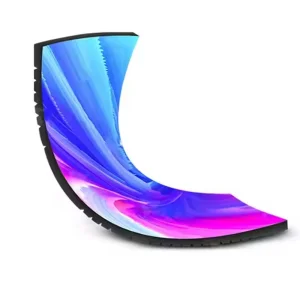
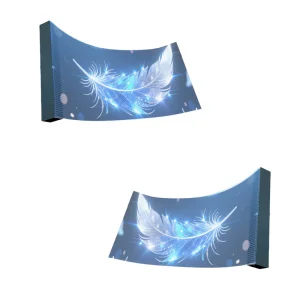
Advanced curved setups like our Flexible P4 Indoor/Outdoor LED Displays empower retail designers and public venue architects to wrap high-resolution displays around pillars, curved walls, and artistic structural installations, avoiding boxy visual corners.
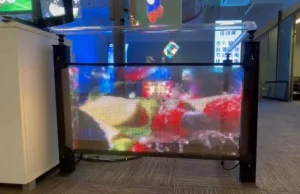
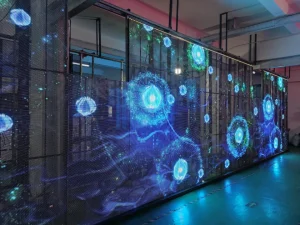
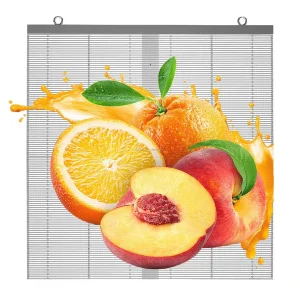
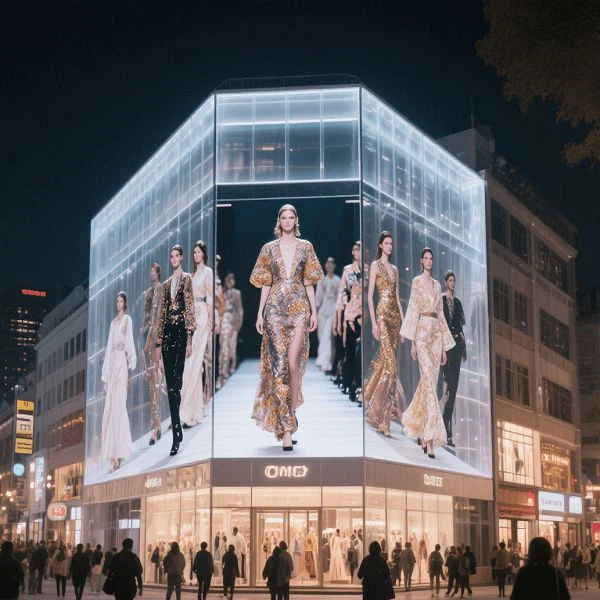
In modern shopping malls and commercial high-rises, structural glass facades are turning into digital signage billboards. Utilizing transparent mesh configurations (P3.91-7.81) ensures high visibility from outside while preserving up to 80% natural light ingress inside the building.
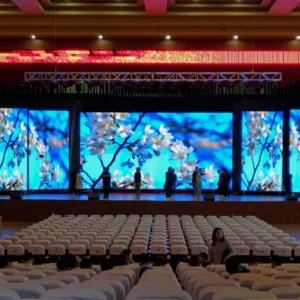
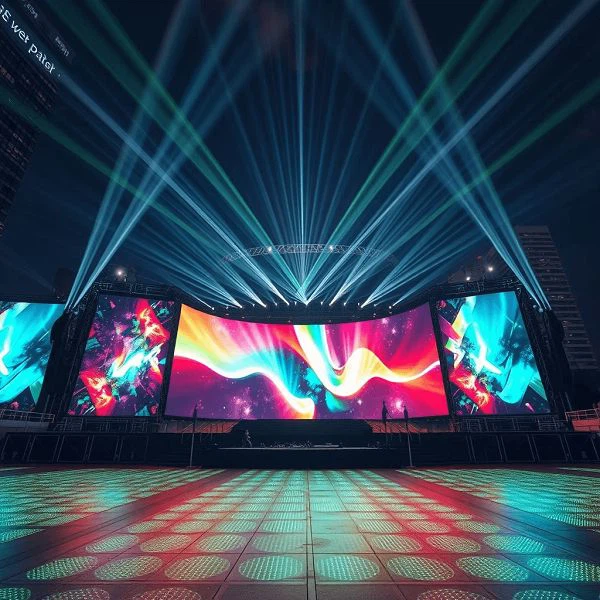
Virtual production platforms and staging environments need exceptionally high refresh rates—reaching 3,840 Hz—along with wide viewing angles and deep black levels. These capabilities minimize camera moiré patterns, allowing live stage productions and broadcast studios to capture high-definition, camera-ready visual backdrops.
Professional B2B buyers look for specific capabilities when sourcing enterprise LED screen systems. We build and customize solutions to directly target these needs:
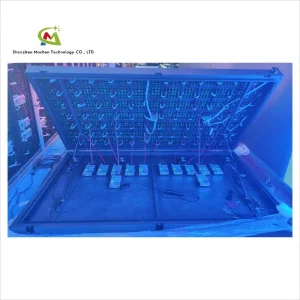
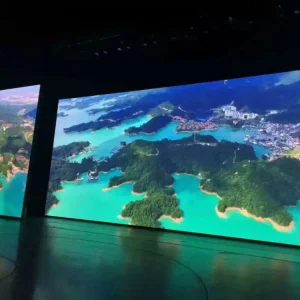
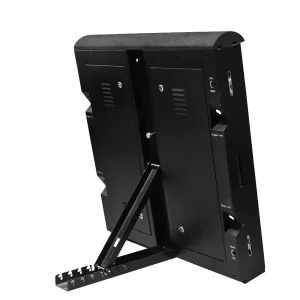
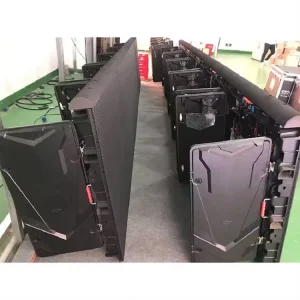
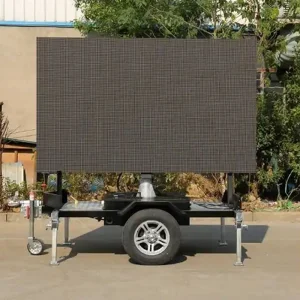
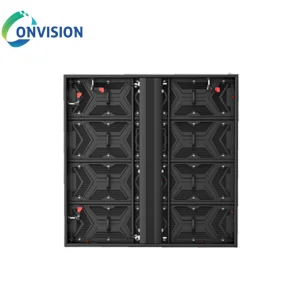
CE Certified LED displays conform directly to EU safety, health, and environmental guidelines. This ensures low electromagnetic interference (EMC testing) to prevent disruption of nearby systems, and compliance with the Low Voltage Directive (LVD) to prevent electrical fires and shocks. Non-certified systems pose significant legal and insurance liabilities for commercial operators.
Pixel pitch refers to the distance in millimeters between the centers of two adjacent pixels. A smaller pitch (e.g., P1.56 or P1.87) offers higher resolution and is ideal for close-range indoor viewing (1.5 to 3 meters). A larger pitch (e.g., P4, P6, or P10) is designed for long-range viewing and provides maximum brightness and weather resistance in outdoor settings.
We perform optical spectroradiometer color calibration on all modules. This process adjusts the chromaticity coordinates and luminance levels, eliminating color differences and "mosaic" effects. The result is a seamless image across the entire screen surface.
Yes. Our transparent film and window screens (like the P3.91-7.81 series) feature high-brightness configurations (up to 5,000 nits) to remain visible under direct sunlight. They maintain a high structural transparency level (between 65% and 80%), preserving views and light transmission inside the building.
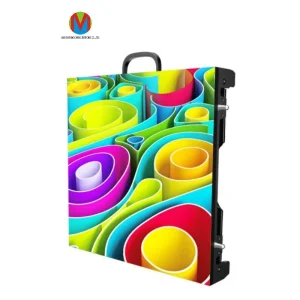
We offer both configurations. Front-access (magnetic modular systems) is ideal for wall-mounted installations where space behind the display is limited. Rear-access is typically preferred for rental cabinets and structural double-sided outdoor pillars, allowing technicians to quickly service power supplies and receiving cards without disturbing the screen face.
Our controllers (with optional SDK interfaces) allow developers to write direct software integrations. This supports automated status reporting, sensor-driven dynamic content changes, diagnostics monitoring, and seamless control through centralized AV management systems.
 Aras LED