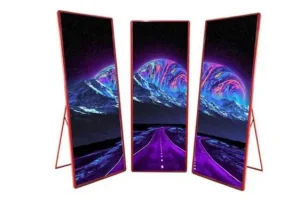
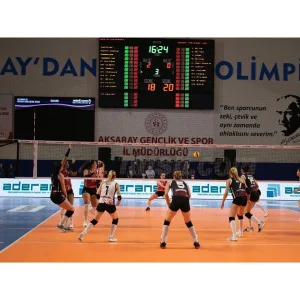
Engineered for architectural integrations, broadcasting environments, and high-performance venue setups.
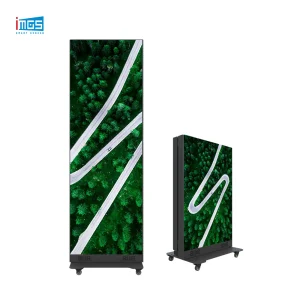
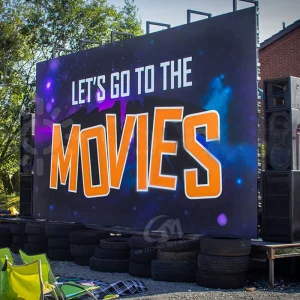
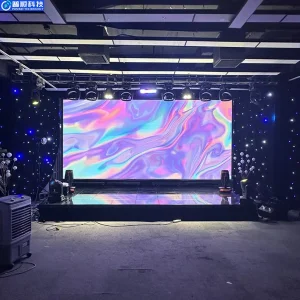
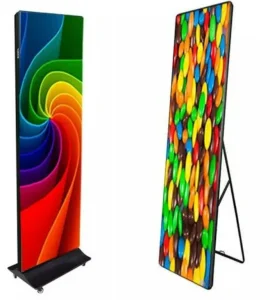
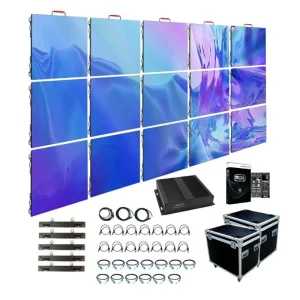
Shenzhen Aras LED Co., Ltd. Factory is located in the China International Metro city-Shenzhen, the global epicenter of optical electronic development and structural display fabrication. Operating under our internationally recognized brand LUMIVIS, our core business model is simple: to create quantifiable long-term value for system integrators, rental agencies, and advertising operations globally.
By designing, engineering, and quality-testing all modules in-house, we transcend the capabilities of typical regional brokers. From component sorting up to system calibration, LUMIVIS delivers consistent, highly robust commercial display arrays engineered to operate 24/7 in harsh operating thermal boundaries.
Our facility houses dust-free production assembly lines, state-of-the-art automatic placement machinery (SMT), and clean room optical alignment suites, ensuring that every panel displaying high-density visual feeds matches exact chromaticity coordinates.
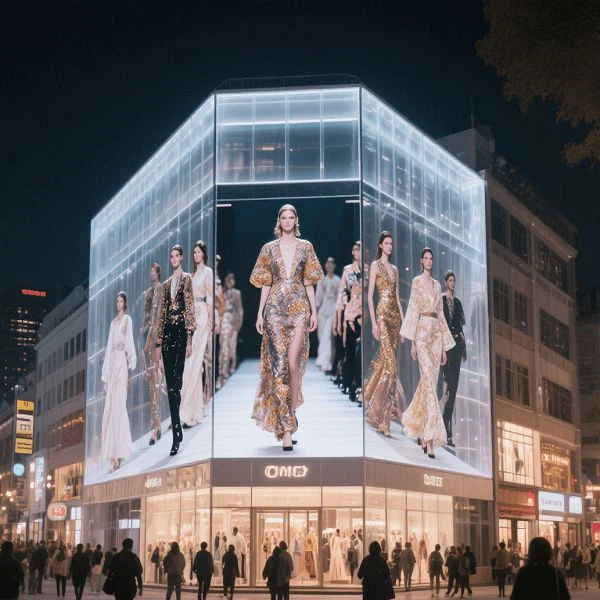
Scale, reliability, and quick turnaround times optimized for multi-location rollouts.
As an agile partner, our 30,000㎡ monthly production capacity gives us the capacity to fulfill high-volume purchase agreements without sacrificing delivery schedules. Our production pipelines are calibrated for rapid adaptation, reducing structural turnarounds to 1 to 10 workdays on standard pixel configurations, helping our regional clients capture volatile market opportunities on short notices.
The shift toward direct-view architectures, high-density packaging, and adaptive HDR interfaces.
The market is transitioning rapidly from standard SMD configurations to sub-1mm display architectures using COB (Chip-on-Board) packaging. Direct pixel-on-board mounting guarantees better thermal performance, wider viewing thresholds, and higher physical durability against physical impact and moisture.
Traditional chroma-key backdrops are being replaced by high-refresh-rate (7680Hz) LED walls configured with HDR capabilities, deep grayscale depth, and low latency processing. This setup allows real-time camera tracking and live interactive rendering for film, broadcast, and performance venues.
Energy costs are a major component of total cost of ownership (TCO). By utilizing Common Cathode technology, our displays precisely supply independent voltage paths to Red, Green, and Blue sub-pixels, reducing power draw by up to 30% and significantly extending the functional operating life of internal ICs.
How technical directors and procurement officers assess professional display hardware.
| Evaluation Parameter | Technical Benchmark | LUMIVIS Factory Standard | Value Yield to Buyer |
|---|---|---|---|
| Refresh Rate & Scanning | ≥1920Hz (Standard) | 3840Hz to 7680Hz High-Refresh | Flicker-free mobile/broadcast camera capture. |
| Packaging Technology | SMD (Surface Mount Device) | SMD, GOB, and Flip-Chip COB | Higher pixel reliability and protection against physical impacts. |
| Calibrated Luminance | 500 - 800 nits (Indoor) | Up to 1200 nits (Indoor) / 5500+ nits (Outdoor) | High visibility in highly illuminated retail or stadium environments. |
| Driver IC Quality | Dual latch basic drivers | Macroblock / MBI High-Gray high-efficiency drivers | Eliminates ghost lines, ensures consistent low-grayscale linearity. |
| Ingress Protection (IP) | IP30 (Indoor environments) | IP65 Front/Rear (Outdoor panels) | Full weather protection, surviving dust storm and heavy rain cycles. |
Tailored structural designs matching distinct environment needs.
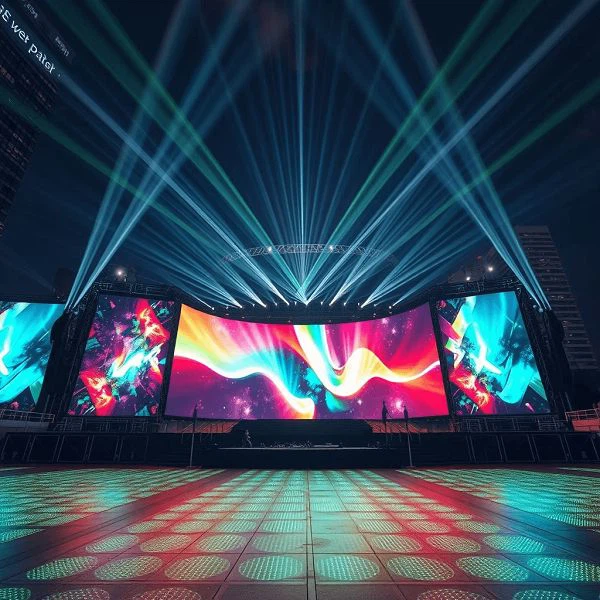
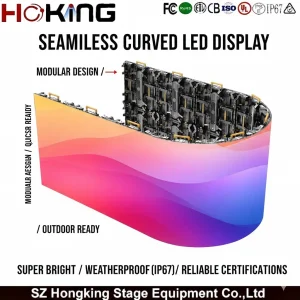
We recognize that modern architectural spaces require more than box-shaped video displays. That is why we provide custom options to fit exact structural projects:
How our quality assurance safeguards your project timeline and brand reputation.
Before panel encapsulation, our automated optical systems scan every printed circuit board (PCB) assembly line. Any micro-level soldering faults, shorted paths, or misalignment errors are flagged and corrected immediately, avoiding early-life component failures.
LED screens are installed in varied environmental climates worldwide. To ensure they operate reliably, we place sample modules into extreme climate chambers, testing their structural integrity under cycling temperatures and humidity extremes.
Using high-precision spectroradiometers, our engineering teams calibrate brightness levels and chromaticity coordinates. This guarantees uniform visual output, preventing off-color pixels from disrupting seamless video wall presentation.
Every single display module and system cabinet leaving our production line goes through a continuous 72-hour burn-in / active aging test. We run dynamic video loops, full white screen brightness tests, and color cycles to identify weak components before packing and shipping.
Shipping electronics internationally requires meeting strict safety, electromagnetic compatibility, and hazardous material regulations. All LUMIVIS displays are fully certified and ready for import into the world's most regulated markets:
Additionally, we offer customized logistics coordination, documentation support, and remote troubleshooting assistance to help our partners install and commission their screens quickly.
Our global services help protect your hardware investment over the long term:
Remote assistance for control card configuration, color calibration, and display alignment.
We include extra receiving cards, hub boards, IC components, and LED masks with every shipment.
Available engineering support for large-scale fixed architectural or venue system setups.
Our product strategy for next-generation visual and digital display solutions.
By moving from traditional FR4 PCBs to glass-substrate panels, we can achieve significantly higher pixel density, excellent thermal management, and lower power requirements for ultra-fine-pitch installations.
Integrating intelligent pixel scaling directly into our receiver electronics. This helps smooth low-resolution input video, dynamically adjusts edge contrast, and reduces screen artifacts without requiring external processors.
Improving anti-glare, anti-static, and hydrophobic properties at the module encapsulation level. Our next-generation screen coatings ensure clear visibility even in direct sunlight, without adding bulk.
From dynamic mobile advertising screens to fine-pitch home theater displays.
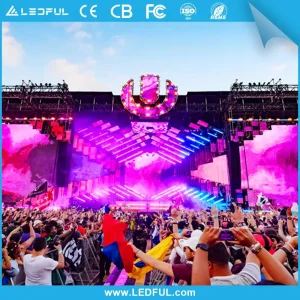
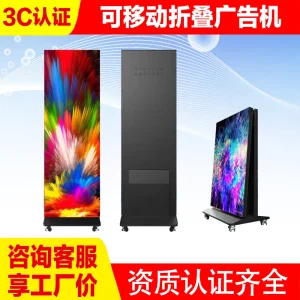
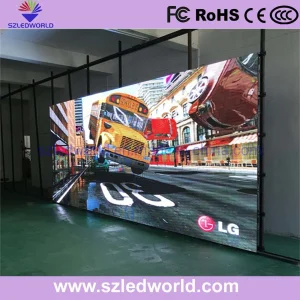
Technical answers to help buyers evaluate hardware design, system integration, and production processes.
SMD (Surface Mount Device) features individual red, green, and blue diodes encapsulated inside a single package soldered onto the board's surface. It offers cost-effective color consistency but is vulnerable to physical damage. GOB (Glue-on-Board) applies an epoxy protective layer over the SMD array to improve water, dust, and impact resistance. COB (Chip-on-Board) eliminates individual packages entirely by bonding bare LED chips directly to the PCB. This provides optimal thermal dissipation, avoids diode loss, increases durability, and allows for ultra-fine pixel pitches below 1.0mm.
The rule of thumb for optimal viewing distance is Pixel Pitch (mm) x 1 = Minimum Viewing Distance (meters). For example, a P2.6 screen looks best from at least 2.6 meters away. For critical applications like TV broadcast studios, control rooms, or premium executive boardrooms, finer pitches (P0.9 to P1.5) are recommended to avoid optical moiré patterns when filmed by camera lenses.
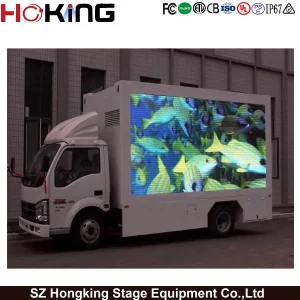
Indoor screens typically require 800 to 1,200 nits of brightness. Outdoor screens, which must compete with direct sunlight, require 5,000 to 7,500 nits to remain legible. For specialized uses, such as mobile digital truck displays, we offer high-brightness models outputting 5,500+ nits to ensure clarity even in bright midday light.
Camera flicker is caused by low PWM (Pulse Width Modulation) refresh rates. A display must have a refresh rate ≥ 3840Hz and a high-performance driving IC (like Macroblock) to stay flicker-free. For professional xR stages and high-definition studio environments, we configure our systems to support refresh rates up to 7680Hz, matching high camera shutter speeds.
We offer full system integration support. This includes custom cabinet dimensions to fit specific wall spaces, curved panels (concave and convex setups), custom branding for rental systems, and integrated control systems pre-configured for direct installation.
Connect directly with our engineering team in Shenzhen. We can provide customized technical specifications, structural design files, and manufacturing pricing tailored to your requirements.
Contact Our Engineers Aras LED