Why Are Transparent LED Walls Trending Worldwide?

Time:2026-10-09 Author:Oliver
0%

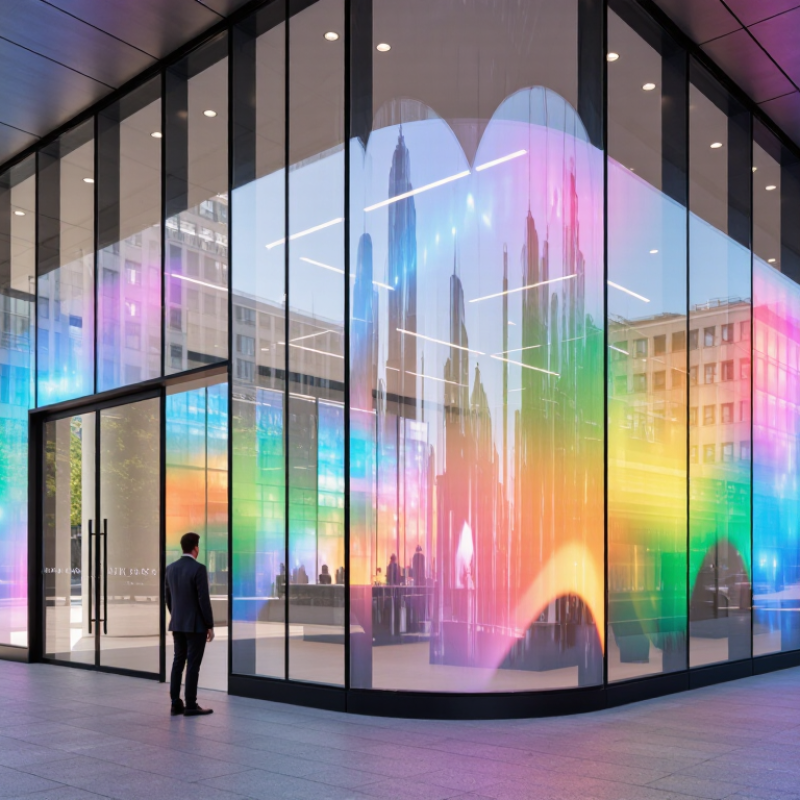
Why transparent LED walls are trending is not simply a question of brightness or novelty. The technology is changing how buildings communicate without hiding their architecture. Retail stores can place animated campaigns behind glass. Airports can display directions across large windows. Museums can create layered scenes while preserving daylight and sightlines.

Chris Riegel, a digital-display industry leader and CEO of STRATACACHE, has often emphasized a related principle: “Technology should disappear into the experience.” That idea helps explain the appeal of transparent LED walls. Their open structure allows natural light to remain visible. Their lightweight modules can fit around columns, entrances, and curved façades. When properly designed, the screen adds information without becoming the entire building.

The practical details matter. A transparent LED wall still needs suitable pixel pitch, brightness control, ventilation, and reliable content management. Installers must also consider viewing distance, reflections, cable access, and local safety requirements. A beautiful wall can fail if maintenance becomes difficult.

Real projects reveal both promise and compromise. Some screens appear almost invisible from a distance. Others show strong framing lines or reduced contrast in direct sunlight. That imperfection deserves attention. “Transparent” does not mean invisible.

Still, the visual effect is powerful. A storefront can glow after sunset while remaining open and inviting. A glass façade can become a storytelling surface. As designers seek flexible, lower-impact digital experiences, transparent LED walls are moving from experimental displays toward practical architectural tools.
Why Are Transparent LED Walls Trending Worldwide?

Transparent LED Walls Defined: 60–90% Transparency and Modular Design

Why Are Transparent LED Walls Trending Worldwide?

Transparent LED walls are trending because they add moving images without fully hiding architecture. Their defining feature is transparency, usually measured between 60% and 90%. At 60%, graphics appear stronger, but less daylight passes through. At 90%, windows remain visually open, although content may look lighter. That trade-off matters. Not every space needs maximum transparency.

Modular design makes these walls practical for retail windows, airports, exhibition halls, and building façades. Each panel can connect with neighboring units, creating larger displays with fewer visible gaps. Technicians can replace a damaged module instead of removing the entire screen.

In practical installations, accurate measurements are essential. Frame depth, mounting strength, ventilation, and cable routes often decide whether the project succeeds. Small errors become obvious across a wide surface.

The numbers can mislead. Transparency depends on viewing angle, lighting, pixel spacing, and the brightness behind the screen. A specification sheet cannot predict every daytime reflection. Engineers should test sample modules at the actual site before approving a full installation.

They should also check heat management, power demand, weather protection, and maintenance access. I have found that darker content usually preserves the feeling of openness better than bright full-screen graphics. That is not a universal rule.

Design teams still need to test, adjust, and sometimes admit that a less transparent configuration works better.

How They Work: SMD LEDs, 3,000–6,000 Nits, and 3–10 mm Pixel Pitch

Why Are Transparent LED Walls Trending Worldwide?

Transparent LED walls use surface-mount device (SMD) LEDs fixed onto slim, light-permeable panels. Each diode produces controlled red, green, and blue light. The open structure lets daylight and storefront details remain visible behind the display.

Brightness typically ranges from 3,000 to 6,000 nits. Around 3,000 nits can suit shaded interiors and covered walkways. Strong sunlight may require closer to 6,000 nits. However, higher brightness also increases power use and can create glare. That trade-off deserves careful testing.

Pixel pitch usually falls between 3 and 10 millimeters. A 3 mm pitch creates sharper text at close viewing distances. A 10 mm pitch can work well on large façades viewed from farther away. Smaller pitch often raises cost and maintenance demands. Field checks should measure viewing distance, sunlight direction, and camera performance. Moiré can still appear in filmed content. It is easy to overlook.

SMD construction supports vivid images in a relatively lightweight format. Transparent gaps reduce the visual weight of a solid video wall. This helps designers preserve glass, daylight, and architectural lines. Yet transparency varies by model and content brightness. A wall may look nearly invisible with dark images, then become visually dominant during bright animation. Careful calibration matters. Estimates alone are not enough.

Market Evidence: LED Displays Projected to Grow 8.8% CAGR, 2023–2030

Transparent LED walls are moving from visual experiments into practical communication systems. Market analyses project the LED display sector to expand at an 8.8% CAGR from 2023 to 2030. That forecast matters because it reflects more than short-term excitement. It points to sustained demand from retail, transport hubs, hospitality, museums, and corporate spaces. These walls preserve sightlines while showing bright motion graphics on glass façades and interior partitions. Still, growth forecasts are not guarantees.

From an installation perspective, transparency can solve a real design problem. A storefront can display product stories without becoming a solid visual barrier. In an airport, directional content may remain visible while daylight enters the building. Technicians must assess viewing distance, pixel pitch, brightness, ventilation, power use, and structural loading. Small planning errors become obvious at close range. This is where professional measurement often matters more than flashy demonstrations.

The 8.8% projection also signals improving confidence in LED infrastructure and content management. However, buyers should examine the assumptions behind each forecast, including regional demand, replacement cycles, and installation costs. Transparent products can be expensive, and their visual impact depends heavily on content quality. A beautiful screen with weak information design quickly becomes background noise. That limitation deserves attention. The worldwide trend may be real, but careful evaluation remains necessary.

Key Applications: Retail, Airports, Events, and Architectural Media Facades

Transparent LED walls are moving from novelty to practical visual infrastructure. Their open design allows daylight and views to remain partly visible behind the display. In retail, this creates storefront stories without turning glass into a solid barrier. A product launch can glow after sunset, while shoppers still see the interior. Brightness, viewing distance, and glare limits must be measured on site. Specification sheets rarely predict the final experience.

At airports, transparent screens can carry wayfinding, schedule updates, and advertising across terminal glass. Content should remain legible under changing daylight, not only during a controlled demonstration. In events, lightweight panels can form stage backdrops, entrance arches, or suspended visual layers. Fast installation matters when crews have limited access time. So does redundancy. A single failed section should not darken the entire message. I have seen ambitious displays weakened by poor cable planning and unreadable typography.

Architectural media facades use transparent LED to add motion without completely hiding a building’s structure. Designers can coordinate pixels with mullions, balconies, and sightlines. This requires cooperation between architects, structural engineers, lighting teams, and content producers. Energy use, maintenance access, weather protection, and nighttime brightness deserve equal attention. The effect may impress, yet constant animation can become visual noise. Sometimes less movement feels more premium. Transparent walls are trending, but their real value depends on disciplined design and honest testing.

Performance Metrics: IP65 Protection, 100,000-Hour Life, and Energy Use

Transparent LED walls are trending worldwide because they deliver moving images without fully blocking glass façades. Their appeal is visible from both the street and the interior. Yet performance matters more than visual novelty.

In outdoor installations, IP65 protection is a practical baseline. The first digit means complete dust protection. The second indicates resistance to water jets. It does not permit underwater use. That difference matters during heavy rain, cleaning, and coastal exposure. A 100,000-hour rated life also sounds impressive, perhaps too impressive. It usually describes LED performance under controlled conditions, not guaranteed wall operation. Heat, humidity, voltage changes, and poor ventilation can shorten it. Regular inspections remain necessary.

Energy use depends on brightness, content, refresh settings, and operating hours. A transparent panel may reduce visual obstruction, but it is not automatically energy efficient. Bright white graphics consume more power than darker motion content. Night schedules and automatic brightness control can reduce demand noticeably. In field reviews, power readings often differ from manufacturer estimates because real façades face changing sunlight and weather. This is where careful measurement becomes essential. A simple energy meter can reveal uncomfortable truths. Lower brightness may protect efficiency, yet it can weaken daytime visibility. Finding that balance requires testing, not guesswork.

Why Are Transparent LED Walls Trending Worldwide? - Performance Metrics: IP65 Protection, 100,000-Hour Life, and Energy Use

Performance Dimension Typical Transparent LED Wall Data Practical Meaning Reference Conditions / Notes
Ingress Protection IP65 for outdoor-rated models Dust-tight construction and protection against water jets from any direction IP65 does not mean submersible; connectors, cabinets, and installation details must also meet the required rating
Rated LED Lifetime Up to 100,000 hours to approximately 50% initial brightness Long service potential with reduced replacement frequency Actual life depends on temperature, drive current, operating hours, ventilation, and maintenance
Typical Power Consumption Approximately 180–400 W/m² during typical content playback Often lower operating demand than opaque LED displays of comparable brightness and area Varies with brightness, image content, refresh settings, pixel pitch, and transparency ratio
Maximum Power Consumption Approximately 600–800 W/m² for high-brightness operation Provides a basis for sizing power distribution, breakers, and thermal management Use the product electrical specification for final system design
Transparency Ratio Approximately 60%–90% Allows daylight, views, and architectural features to remain partially visible Higher transparency can reduce visual obstruction but may affect contrast and brightness
Brightness Approximately 4,000–7,000 nits for many outdoor applications Improves daytime readability on glass façades and exterior installations Required brightness depends on sunlight exposure, viewing angle, content, and local regulations
Refresh Rate Typically 1,920–3,840 Hz Reduces visible flicker and supports clearer camera footage Camera performance also depends on shutter speed, exposure, and control-system settings
Operating Temperature Common rated range: approximately −20°C to +50°C Supports use across many seasonal climates The actual range is model-specific; direct sunlight may increase cabinet temperature significantly
Module or Cabinet Weight Approximately 10–20 kg/m² for lightweight transparent designs Can reduce structural load and simplify installation on suitable façades Mounting frames, cables, wind loads, and access systems must be included in structural calculations
Pixel Pitch Common range: approximately 3.9–20 mm Smaller pitch provides finer image detail; larger pitch can increase transparency and viewing distance Selection should match viewing distance, screen size, content type, and façade geometry
Maintenance Access Front or rear service options, depending on the design Can reduce disruption when displays are installed on busy façades or inside retail spaces Confirm access clearance, spare-part availability, cleaning requirements, and safe working procedures before installation

Note: The figures shown are representative industry ranges for transparent LED display systems rather than guarantees for every installation. Final performance should be verified against the selected system's technical documentation and site conditions.

FAQS

What is a transparent LED wall?

It is a modular display that shows moving images while allowing light and views through. Transparency commonly ranges from 60% to 90%.

Does higher transparency always create a better result?

No. A 90% transparent wall preserves more daylight, but graphics may appear lighter. A 60% option can produce stronger images.

Where are transparent LED walls commonly used?

They suit retail windows, airports, exhibition halls, museums, façades, and interior glass partitions. They preserve important sightlines.

Why does modular design matter?

Panels connect into larger surfaces with fewer visible gaps. Technicians can replace one damaged module instead of removing the entire wall.

What should engineers check before installation?

They should measure frame depth, mounting strength, ventilation, cable routes, and structural loading. Small errors become obvious across wide surfaces.

Can specification numbers predict real transparency?

Not completely. Viewing angle, pixel spacing, lighting, and background brightness change the perceived result.A sample panel should be tested at the actual site.

What does IP65 protection mean?

It indicates complete dust protection and resistance to water jets. It does not allow underwater use.

How reliable is a 100,000-hour lifespan rating?

It usually reflects controlled conditions, not guaranteed wall operation. Heat, humidity, voltage changes, and poor ventilation can shorten performance.

How can operators reduce energy use?

Automatic brightness control, darker content, and night schedules can reduce demand. Bright white graphics often consume more power.A simple energy meter helps.

Is the market growth forecast a guarantee?

No. An 8.8% projected annual growth rate suggests demand, not certainty. Regional demand, replacement cycles, and installation costs can change the outcome.

Conclusion

Transparent LED walls are becoming a popular solution for businesses and public spaces because they combine vivid digital communication with an open, modern appearance. Their panels typically provide 60–90% transparency, allowing natural light and architectural features to remain visible while displaying dynamic content. Built with SMD LEDs, they can deliver brightness levels of around 3,000–6,000 nits and pixel pitches of 3–10 mm, supporting clear images from different viewing distances. These features help explain why transparent LED walls are trending across global markets, which are projected to grow at an 8.8% CAGR from 2023 to 2030.

Their modular structure also makes installation and maintenance more flexible. Common applications include retail storefronts, airports, live events, and architectural media façades. With options such as IP65 protection, an expected lifespan of up to 100,000 hours, and efficient power consumption, transparent LED walls can provide durable performance in demanding environments. As cities and businesses seek engaging displays without blocking views or natural light, this technology offers a practical balance between visual impact, design flexibility, and long-term value.

Oliver

Oliver

Oliver is a seasoned marketing professional with a wealth of expertise in driving brand awareness and engagement. With a deep understanding of our company's product offerings, he consistently delivers high-quality content that enriches our professional blog. His insights not only shed light on......