Indoor screens have become essential in various settings, from retail spaces to corporate environments. Understanding why fine pixel pitch matters for indoor screens is crucial for both designers and users. Fine pixel pitch enhances clarity, providing sharper images and better overall visuals. This improved resolution is essential for applications where detail matters.
When displays are viewed up close, like in indoor settings, fine pixel pitch becomes vital. It minimizes the visible gaps between pixels, preventing the "screen door" effect. High-quality images lead to improved engagement and communication. An audience can better connect with the content when the visuals are sharp and clear.
Not all indoor screens prioritize fine pixel pitch, leading to potential drawbacks. Some cheaper options may sacrifice clarity for cost. This trade-off can affect the viewer experience. Hence, when selecting indoor screens, it’s essential to understand why fine pixel pitch matters for indoor screens. Investing in quality can enhance the experience significantly.
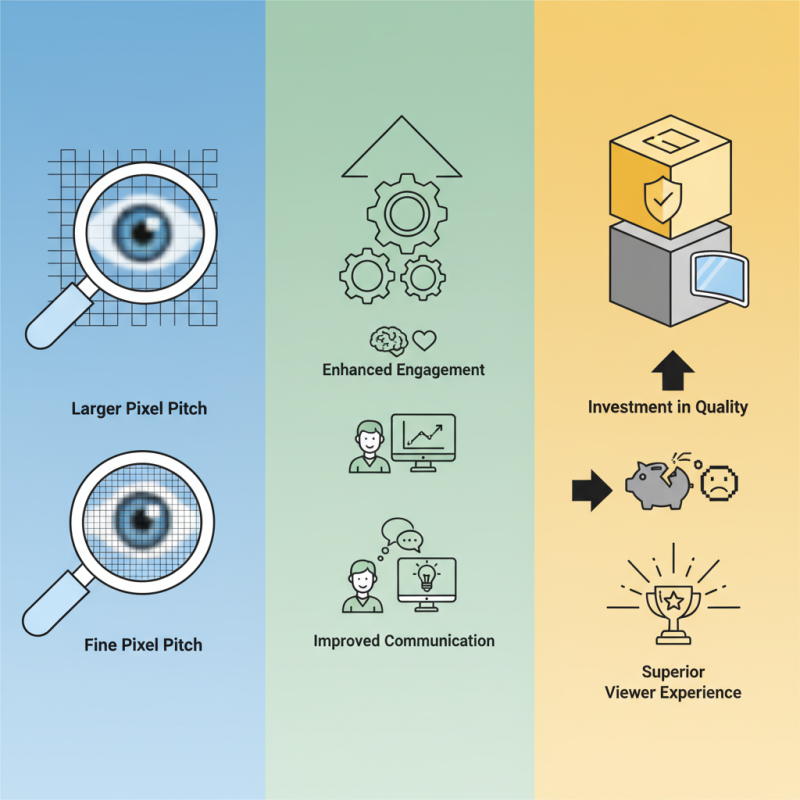
Fine pixel pitch is crucial for indoor screens. This concept refers to the spacing between pixels on a display. A finer pixel pitch means more pixels in a given area. This results in sharper images and enhanced detail. According to industry reports, displays with a pixel pitch of 2.5mm or less are becoming the standard for high-quality indoor environments.
When analyzing viewing distance, the pixel pitch matters significantly. Displays with a finer pixel pitch can be viewed from closer distances without losing image clarity. For example, a 1.5mm pixel pitch screen allows viewers to stand less than five feet away and still experience a crisp view. This enhances communication in environments such as control rooms and video conferencing.
However, achieving the right pixel pitch involves trade-offs. Fine pixel pitch screens often come with higher costs. Additionally, they may require more sophisticated calibration to ensure color accuracy. Understanding the balance between cost and performance is critical for decision-makers. It is essential to assess specific use cases before investing in such technology. By doing so, organizations can better leverage the full potential of fine pixel pitch indoor screens.
Pixel density plays a crucial role in determining display quality. Higher pixel density leads to sharper images and clearer text. With indoor screens, clarity is vital, especially in settings like conferences or retail. A fine pixel pitch ensures you see details up close without pixelation. This is important for creating immersive experiences that capture attention.
Larger displays with low pixel density can create a grainy image. It can be frustrating for users trying to read fine print or enjoy high-resolution content. Even minor imperfections in pixel density can detract from overall viewing enjoyment. In contrast, fine pixel pitches provide a smooth visual experience, even from a close distance.
However, achieving optimal pixel density is not without challenges. Trade-offs may arise between cost and quality. Choosing the right balance requires thoughtful consideration. Display technology is constantly evolving, and it can be tough to keep up. Understanding these nuances can help in making informed decisions for effective indoor displays.
When comparing fine pixel pitch to standard pixel pitch, the differences are striking. Fine pixel pitch displays have a smaller pixel size, which allows for higher resolution. Consequently, images are sharper and more detailed. This is especially important in indoor environments where viewers are often closer to the screen. A finer pixel pitch can reduce the visibility of individual pixels, enhancing the visual experience.
Standard pixel pitch screens typically serve broader viewing distances. They can be less costly but may sacrifice quality. For large venues, standard pitch might suffice. However, for applications like retail spaces or exhibitions, fine pixel pitch is preferable. The option to view high-definition content at close range is a significant advantage that fine pixel pitch provides. This level of detail contributes to creating immersive environments that engage audiences.
Some challenges arise with fine pixel pitch technology. It often comes at a higher price point, making initial investments steep. Not all facilities require such detail. For some, standard pixel pitch might be adequate. Evaluating the specific needs and budgets is essential. Balancing quality and cost can be tricky yet vital in making the right choice for indoor display solutions.
This chart illustrates the brightness levels of indoor screens with different pixel pitch types. Fine pixel pitch displays offer superior brightness compared to standard pixel pitch screens, making them ideal for high-quality indoor visual experiences.
Fine pixel pitch technology is transforming various industries by enhancing visual experiences. In retail, displays with a pixel pitch as small as 1.2mm are commonly used. Reports show that clearer and sharper images can increase customer engagement by up to 25%. This improvement can lead to higher sales conversion rates. Retailers invest in high-quality indoor screens to communicate their brand message effectively.
Corporate environments also benefit from fine pixel pitch displays. A study highlights that team collaboration improves by 30% with clearer visuals during presentations. These screens allow for detailed graphics, making data analysis more effective. Clear displays help in grasping complex information quickly. The demand for fine pixel pitch technology in conference rooms is witnessing gradual growth, reflecting its crucial role in business efficiency.
In the events sector, fine pixel pitch screens are becoming the norm. They enhance the audience’s experience at concerts and exhibitions. High-resolution visuals create immersive environments. According to industry data, audience retention increases by 40% with better visual clarity. However, in practice, not all users maximize this technology's potential. Proper installation and calibration are essential to reap full benefits. Misalignment or poor setup can lead to subpar performance, reminding one of the complexities involved in tech adoption.
The demand for fine pixel pitch displays continues to rise as technology advances.
These displays provide sharper images and better color accuracy, making them ideal for indoor environments.
In settings such as control rooms and venues, clarity is crucial.
Visitors expect a seamless visual experience without pixelation.
Trends indicate that fine pixel pitch technology is evolving rapidly.
The shift toward smaller pixels allows manufacturers to create more compact screens.
This makes high-resolution displays possible at shorter viewing distances.
Users can enjoy vibrant images even in dimly lit areas.
As this technology matures, cost-effective solutions may emerge, making fine pixel pitch displays more accessible.
Tips: Consider the viewing distance when selecting a display.
A smaller pixel pitch is beneficial for close viewing.
Regularly assess your display's performance to ensure optimal quality.
Keep up with industry trends, as innovations may enhance your setup in the future.
Fine pixel pitch technology is not without challenges.
Users must weigh the benefits against potential costs and technical complexities.
: Higher pixel density leads to sharper images and clearer text, enhancing viewer experience.
Low pixel density can create grainy images, making it hard to read fine print.
Fine pixel pitch offers smaller pixels, resulting in higher resolution and detail, ideal for close viewing.
Yes, they often come at a higher price point, requiring careful budgeting.
Retail spaces and exhibitions benefit from fine pixel pitch due to high-definition content needs.
Challenges include higher costs and technical complexities, requiring thoughtful assessment.
Regularly assess performance and stay updated on industry trends for enhancements.
For larger venues or broader viewing distances, standard pixel pitch may suffice.
Consider viewing distance; a smaller pixel pitch is better for close-up viewing.
Yes, they can provide vibrant images even in low light conditions.
Fine pixel pitch refers to the small distance between pixels on a display screen, which significantly impacts the quality of indoor screens. Understanding why fine pixel pitch matters for indoor screens is essential for achieving high-resolution images that cater to close viewing distances. The importance of pixel density can't be overstated; higher pixel density enhances image clarity and detail, making it critical for settings like conference rooms and retail displays.
Comparing fine pixel pitch with standard pixel pitch reveals the advantages of finer specifications, particularly in terms of perceived image quality and versatility in various applications. Industries such as entertainment, advertising, and corporate communications are increasingly adopting fine pixel pitch technology to create immersive experiences. Looking ahead, future trends suggest ongoing advancements in fine pixel pitch displays, pushing the boundaries of what indoor screens can achieve in terms of both performance and aesthetic appeal.

Aras LED