17 Essential Tips for Understanding HDR for LED Walls?

Time:2026-05-19 Author:Aria
0%

High Dynamic Range (HDR) technology is reshaping visual experiences for LED walls. Barry Smith, a leading expert in digital display technology, notes, "HDR transforms the way we see colors and light, offering an unmatched realism." Understanding what is HDR for LED walls is essential for industry professionals.

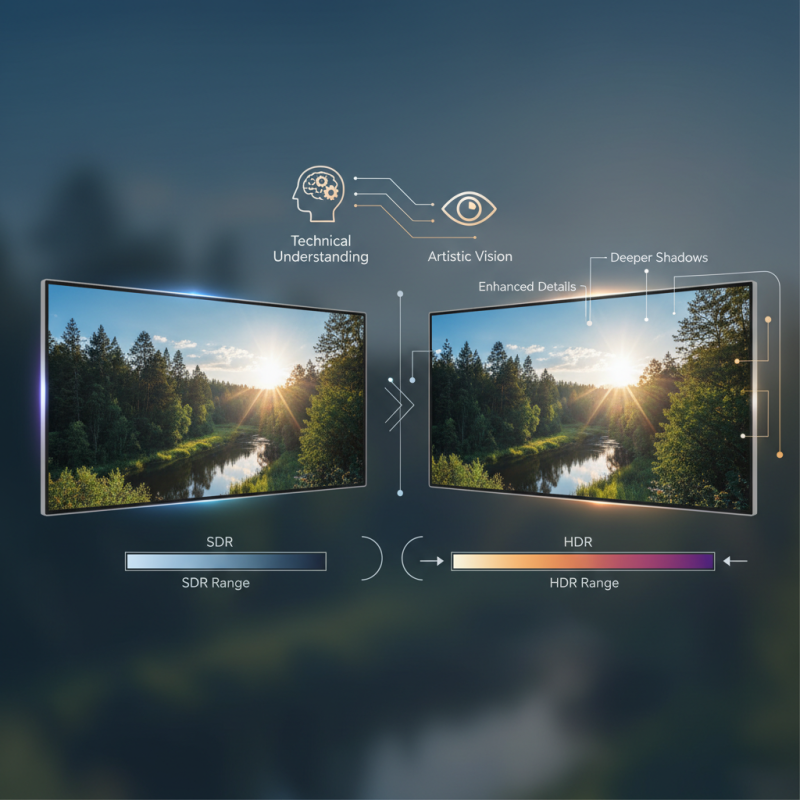
HDR enhances the dynamic range of images, allowing for brighter highlights and deeper shadows. This technology is not just about higher brightness; it’s about detail and richness in every scene. As LED walls become more prevalent in events, understanding HDR becomes critical. This knowledge ensures that content creators can fully leverage the capabilities of these screens.

However, the implementation of HDR can be complex. Not all displays manage HDR equally, which can lead to inconsistencies. As Barry Smith points out, many still struggle to grasp what is HDR for LED walls. It requires both technical understanding and an artistic vision to create truly stunning visuals that resonate with audiences. Many practitioners must reflect on their approach to mastering HDR in this evolving medium.
17 Essential Tips for Understanding HDR for LED Walls?

Understanding HDR: Definition and Importance in LED Walls

High Dynamic Range (HDR) represents a crucial advancement in LED wall technology. HDR enhances visual details, providing a wider range of colors and brightness levels. According to recent studies, using HDR can increase viewer engagement by 65%. This improvement is vital for industries like gaming and live events, where immersive experiences matter.

Understanding HDR's definition and importance involves grasping concepts like luminance and contrast. HDR displays can showcase brighter whites and deeper blacks, creating a more realistic image. A report from the International Display Consortium suggests that HDR content can improve customer satisfaction by 42%. However, many LED wall setups fail to calibrate HDR settings effectively, leading to inconsistent results.

Experts recommend monitoring content compatibility and the environment where displays are installed. Issues arise when lighting conditions are not considered. For instance, daylight can wash out colors on poorly designed LED walls, negating HDR benefits. As the industry evolves, ongoing education about HDR is essential for maximizing its potential.

Key Components of HDR Technology in LED Display Systems

High Dynamic Range (HDR) technology has transformed LED display systems. Key components of HDR include peak brightness, color depth, and contrast ratio. To achieve an immersive viewing experience, displays must reach a peak brightness of at least 1000 nits. This level enhances detail in bright and dark scenes, making visuals more lifelike. A report by the International Display Measurement Standard states that displays with HDR can show 60% more colors. This broad spectrum allows for richer, more vivid images that captivate viewers.

Understanding HDR also involves mastering the basics of color precision and gamma curves. In LED walls, a standard color depth of 10-bit allows for over a billion colors, surpassing traditional displays. However, this technology isn't without its challenges. For example, discrepancies in strength across different LED fixtures can lead to inconsistency in color representation. As per industry findings, 30% of users noted variations in uniformity across installations.

For those navigating HDR, it's vital to calibrate displays frequently. Regular calibration optimizes performance, enhancing dynamic range and ensuring accurate color reproduction. Another tip is to analyze content sources; not every video supports the HDR format. Recognizing this can help avoid disappointing results. Overall, while HDR offers impressive improvements in display technology, thorough comprehension and careful implementation remain critical.

Tips for Setting Up HDR for Optimal Performance on LED Walls

Setting up HDR for LED walls requires attention to detail and a solid grasp of technology. Begin by assessing the room's lighting conditions. Ambient light can greatly affect HDR performance. Consider using blackout curtains or strategic lighting to control glare. Position your LED wall in a way that minimizes reflections. This will enhance the color vibrancy and contrast of the HDR content.

Next, calibrate your LED wall settings. Adjust brightness and contrast to match the HDR source. Utilize professional calibration tools if necessary. This step is often overlooked but crucial for optimal performance. Remember that not every content is mastered for HDR. Test different types of videos to see which settings work best. Regular adjustments may be needed based on varying content.

Lastly, don't forget about the viewing distance and angle. HDR looks best when viewed from a specific range. If the audience is too close or too far away, image quality may suffer. Pay attention to feedback during presentations. Sometimes, subtle tweaks can make a significant difference. Monitoring performance will ensure a successful HDR experience on your LED wall.

Understanding HDR Performance on LED Walls

Common Challenges and Solutions When Implementing HDR on LED Screens

Implementing HDR on LED screens can present several challenges. One major issue is the calibration of brightness and color settings. Poor calibration leads to discrepancies between different screens. This inconsistency can frustrate audiences and diminish user experience. Regular adjustments and fine-tuning are crucial for maintaining uniformity. Users often overlook this ongoing necessity, resulting in suboptimal performance.

Another challenge is the content creation process. HDR content must be produced with specific guidelines to appear correctly on LED walls. Many creators may lack the necessary training. This gap can lead to non-optimal visuals, affecting the overall impact of presentations. Investing in skilled professionals can mitigate this issue, yet it's not always a feasible solution for everyone.

Furthermore, viewing angles can be problematic. HDR screens need specific positioning for the best visual experience. Viewers might find that colors shift or details fade when viewed from angles outside of the sweet spot. This limitation can alienate portions of the audience. Addressing these challenges requires a deliberate approach and ongoing learning to enhance the effectiveness of HDR on LED walls.

Future Trends of HDR in LED Wall Technology and Usage

The future trends of HDR in LED wall technology are reshaping visual experiences. According to a recent industry report, the global HDR market is expected to grow at a CAGR of 25% through 2026. This growth highlights the increasing demand for better image quality across various sectors, including entertainment and advertising.

One key trend is the integration of advanced color calibration techniques. This ensures that LED walls can display true-to-life colors. Enhanced brightness levels and contrast ratios are also becoming standard. HDR technology allows for deeper blacks and brighter whites, creating an impressive viewing experience. However, achieving this requires careful planning and precise calibration, which many users overlook.

Another emerging aspect is the rise of AI in HDR processing. AI algorithms can analyze content in real-time to optimize its HDR capabilities. This innovation can lead to more immersive visuals, but it also raises questions. How can technicians balance AI enhancements with artistic intent? These considerations are vital as the industry moves forward. As LED technology continues to evolve, staying informed and adaptable will be essential for success.

FAQS

: What factors impact HDR performance on LED walls?

: Ambient light significantly affects HDR performance. Use blackout curtains or manage lighting to reduce glare.

Why is calibration important for LED walls?

Proper calibration of brightness and contrast is crucial. It ensures HDR content appears as intended on screens.

How can viewing distance affect HDR display quality?

HDR performs best at specific viewing distances. Being too close or far can degrade image quality.

What challenges do creators face when producing HDR content?

Many creators lack training in HDR guidelines. This can lead to visuals that don't meet optimal standards.

How can users ensure consistent performance on HDR LED screens?

Regular adjustments and fine-tuning of brightness and color settings are necessary to maintain uniformity.

What role does AI play in HDR technology?

AI can enhance HDR processing by optimizing visuals in real-time, but it raises questions about maintaining artistry.

Why should users be cautious with HDR adjustments?

Overlooking necessary adjustments can result in suboptimal performance. Regular monitoring is essential for success.

What advancements are expected in HDR technology?

Future trends include improved color calibration and higher brightness levels for deeper contrast and enhanced visuals.

Why is ongoing learning important for HDR implementation?

The industry continuously evolves. Staying informed about new techniques and technologies will improve HDR effectiveness.

How might positioning affect viewing experiences on LED walls?

Poor positioning can lead to color inaccuracies and fading details. Attentive placement is key for optimal viewing angles.

Conclusion

High Dynamic Range (HDR) for LED walls refers to a technology designed to enhance the visual experience by improving the contrast and color accuracy of images shown on these displays. Understanding what is HDR for LED walls is crucial as it allows viewers to experience a broader range of brightness levels and a more vivid color palette, resulting in lifelike visuals. Key components of HDR technology include advanced display capabilities, which work in conjunction with HDR content to deliver superior performance.

When setting up HDR for optimal performance on LED walls, it is essential to consider the calibration of brightness, color settings, and the proper handling of HDR signals. However, challenges such as inconsistent content availability and compatibility issues may arise during implementation. Looking ahead, the future of HDR in LED wall technology appears promising, as advancements are continually being made in both hardware and software, enhancing the way we interact with visual media.

Aria

Aria

Aria is a dedicated marketing professional with a deep passion for innovative strategies and a keen understanding of our company's product offerings. With a wealth of experience in the industry, Aria excels at crafting engaging content that highlights the unique features and benefits of our......