How to Create Dynamic LED Advertising Content in 2026? The answer begins with attention, context, and disciplined experimentation. Digital out-of-home advertising is becoming more measurable and responsive. The World Out of Home Organization’s 2024 Global Expenditure Report reported more than $40 billion in global OOH revenue during 2023. Digital formats represented roughly one-third of that market. Growth is clear. Yet growth alone does not guarantee effective creative.
To understand how to create dynamic content for LED advertising, marketers must connect live data with a simple visual idea. Weather, traffic, time, location, and audience behavior can shape each message. A cold evening might trigger a warm beverage offer. A congested road might display a short, readable travel reminder. Nielsen’s out-of-home research consistently shows that reach and repeated exposure remain major strengths of the medium. Therefore, content should work within seconds, even without sound. Test it from a distance. Test it in sunlight.
Advertising expert David Ogilvy once said, “You cannot bore people into buying your product.” His principle still matters on giant LED screens. Motion should guide attention, not create visual noise. Strong contrast matters. So does restraint. The difficult part is admitting that a beautiful animation may still fail commercially. Some campaigns chase novelty too aggressively. Others change too slowly. Effective 2026 content should use audience data responsibly, protect privacy, and measure outcomes through verified reports, brand-lift studies, and conversion signals. The process will not be perfect. That is exactly why structured testing belongs at the center of every dynamic LED strategy.
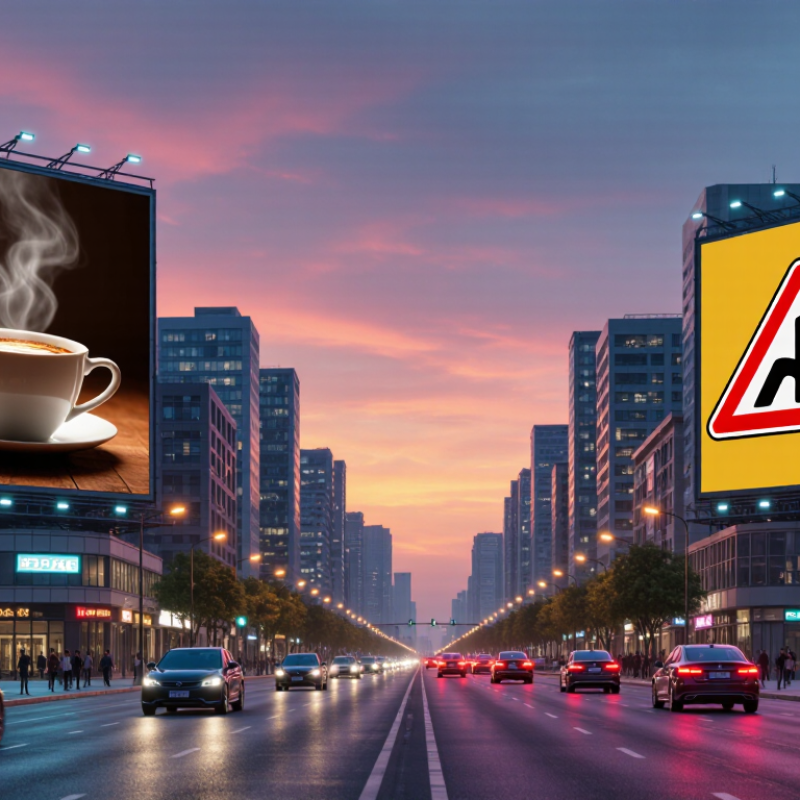
Define the Goals and Audience for Your 2026 LED Advertising Campaign
How to Create Dynamic LED Advertising Content in 2026?
Define the campaign goal before designing any LED advertisement. A clear goal might increase store visits, promote an event, or improve local awareness. Connect that goal to one measurable action, such as QR scans, website visits, or redemption codes. Keep it simple. A roadside display may have only three seconds to communicate its message. Use large type, strong contrast, and one clear action. Avoid placing several offers on one screen. That usually weakens recall.
Define the audience with real viewing conditions in mind. Consider age, commuting habits, language preferences, and likely viewing distance. A commuter near a train station needs different content from a shopper outside a supermarket. Context matters. Record when people pass, where they look, and how long they can reasonably see the screen. Weather and daylight also affect readability. Bright sunlight can reduce contrast, while evening displays may need softer intensity. These details require observation, not assumptions.
Build several content versions for different audience moments. A morning message could promote convenience, while an evening message could highlight availability. Use motion carefully, because fast transitions can reduce comprehension. Test one variable at a time, such as headline length or image placement. Track results over several days instead of trusting one busy period. A campaign may appear successful because of an unrelated event. Review weak results honestly. The audience definition may be wrong, or the goal may be too broad. Test, then adjust.
Choose LED Display Hardware, Formats, and Content Management Tools
How to Create Dynamic LED Advertising Content in 2026?
A reliable LED campaign starts with the display, not the animation. Choose pixel pitch according to viewing distance. A roadside screen needs different detail than a lobby display. Check brightness, refresh rate, viewing angles, ventilation, and weather protection. For outdoor use, sealed cabinets and automatic brightness control matter during rain and strong sunlight. I once saw a beautiful design fail because small text disappeared at dusk. Test content on the actual screen.
Use short videos, bold typography, and high-contrast color combinations. Keep the main message readable within three seconds. Motion should guide attention, not create visual noise. Portrait, landscape, and unusual screen shapes require separate layouts. Prepare several formats, including MP4, image sequences, HTML5, and real-time data feeds. A static fallback is useful when connectivity drops. It happens.
Your content management tool should support remote scheduling, permission controls, screen grouping, and playback verification. Weather, traffic, inventory, or event data can trigger timely creative changes. Build approval steps before publishing, especially when multiple teams edit campaigns. Track proof-of-play reports and compare them with audience responses. Some analytics remain imperfect, and reported impressions can mislead. Review the data manually. Keep accessibility, local advertising rules, and personal-data protection in every workflow. The best system is not the most complicated one. It is the one staff can operate correctly under pressure.
How to Create Dynamic LED Advertising Content in 2026?
Choose LED display hardware, content formats, and content management tools based on the viewing environment.
The chart shows typical brightness targets for LED advertising displays. Indoor screens generally use lower brightness to protect image quality and viewer comfort, while outdoor and direct-sun installations require higher brightness. Dynamic campaigns should also use high-refresh-rate hardware, correctly prepared aspect ratios, and a CMS that supports scheduling, remote updates, and multi-screen playback.
Design Motion-Based Content for Clarity, Accessibility, and Brand Impact
How to Create Dynamic LED Advertising Content in 2026?
Design Motion-Based Content for Clarity, Accessibility, and Brand Impact
Dynamic LED content should communicate before it entertains. Start with one message, one visual priority, and generous spacing. The World Health Organization estimates that 1.3 billion people live with significant disabilities. That figure makes accessibility a design requirement, not a decorative option. Use high-contrast color combinations, large type, and captions for spoken information. Avoid rapid flashing. WCAG 2.2 recommends avoiding content that flashes more than three times per second, reducing seizure risks. Keep motion purposeful. A product image can gently scale. A headline can enter once.
Test the screen from the pavement, not only from the design desk. Check viewing distances, daylight glare, traffic speed, and nighttime brightness. The International Telecommunication Union reported that 2.6 billion people remained offline in 2023, reminding us that public screens must work without personal devices or sound. A clear seven-word message often beats a clever sentence. Keep it readable.
Measure attention, but question the measurement. Industry forecasts from PQ Media continue to show digital out-of-home advertising expanding globally, increasing pressure for measurable creative performance. Track dwell time, recall studies, and message comprehension when possible. I still make one mistake: adding motion because an empty space feels unfinished. It usually weakens clarity. A quieter animation may create stronger brand memory. Design, observe, revise.
Connect Live Data, Scheduling Rules, and Real-Time Content Triggers
How to Create Dynamic LED Advertising Content in 2026?
Dynamic LED advertising becomes more useful when screens respond to live conditions. Connect a data feed to weather, traffic, inventory, or event schedules. A rainy forecast can trigger waterproof products. A crowded station can switch to short, high-contrast messages.
According to the World Out of Home Organization’s 2024 Global Expenditure Report, global out-of-home advertising revenue reached about $41.9 billion in 2023. That growth shows stronger demand for measurable, flexible screen networks.
Scheduling rules should control when content changes. Set time windows, location filters, audience conditions, and frequency limits. Then add real-time triggers through a secure content management system.
A temperature threshold might activate a cooling message. A stock update might pause an unavailable offer within seconds. PQ Media’s Global Out-of-Home Advertising Forecast reports continued double-digit growth for digital out-of-home advertising, reinforcing the value of automated delivery.
Keep a human review step. Data can arrive late, fail, or mislead. I once treated a weather feed as reliable, only to discover a local station reported different conditions. That mistake matters.
Build fallback creative, approval rules, and clear logs. Test every trigger on a small screen group before wider deployment. Simple rules often perform better. Fancy automation can still confuse viewers.
Test, Monitor, and Optimize LED Advertising Performance Continuously
Dynamic LED advertising in 2026 should be managed like a live performance, not a finished poster. Test different headlines, colors, motion speeds, and call-to-action timings. Keep one variable stable during each test. Otherwise, the results become difficult to interpret. PQ Media’s Global Out-of-Home Media Forecast reports continued growth in digital out-of-home investment, increasing the need for precise performance control. More spending also means less room for careless creative decisions.
Monitor each screen continuously. Track play counts, dwell time, brightness, viewing conditions, and audience movement. Compare performance by location and time of day. A message that works beside a train station may fail near a quiet retail street. Nielsen’s out-of-home research has shown that OOH reaches a large majority of adults each month, but reach alone cannot prove effectiveness. Exposure is not attention. A beautiful loop can still underperform. Campaign teams should review weak results honestly, even when the creative feels impressive.
Tips: Build a simple dashboard with daily alerts for screen faults, unusual drops, and scheduling errors. Refresh underperforming content quickly, but avoid changing everything at once. Test weather-based messages, such as bright colors during rain or shorter copy during heavy traffic. Record every adjustment in a shared log. The World Out of Home Organization emphasizes measurement standardization across markets, yet reporting methods still differ. That limitation deserves attention. Use reliable local data, document assumptions, and leave space for improvement.
FAQS
Choose one clear goal, such as store visits, event attendance, or local awareness. Connect it to one measurable action. Use QR scans, website visits, or redemption codes. Keep it simple.
Study age, travel habits, language preferences, and viewing distance. A train-station commuter needs different content from a supermarket shopper. Context matters. Observe real movement instead of relying only on assumptions.
Use one message and one action. Drivers may have only three seconds to understand the screen. Large letters and strong contrast help. Several offers usually weaken recall.
Use motion to guide attention, not merely fill empty space. A product image may scale gently. A headline may enter once. Fast transitions can reduce comprehension.
Use large type, clear spacing, and high-contrast colors. Add captions when spoken information appears. Avoid rapid flashing. A quieter animation often works better.
Create versions for different audience moments. A morning message might emphasize convenience. An evening message could show availability. Weather and daylight also affect readability.
Test one variable at a time, such as headline length or image placement. Keep the other elements stable. Otherwise, results become difficult to interpret. Small tests reveal more.
Track play counts, viewing time, brightness, audience movement, and screen faults. Compare results by location and time of day. Reach alone does not prove attention.
Review the audience definition, campaign goal, and viewing conditions honestly. Refresh weak content, but avoid changing everything at once. Record each adjustment in a shared log. I still make mistakes.
Conclusion
Creating effective LED advertising in 2026 begins with clear campaign goals and a well-defined audience. Decide whether the campaign is intended to build awareness, promote an offer, guide visitors, or encourage immediate action. Then select display hardware, screen formats, and content management tools that match the viewing environment, audience distance, brightness conditions, and scheduling needs. A practical approach to how to create dynamic content for LED advertising is to combine concise messaging, strong visual hierarchy, readable typography, smooth motion, and accessible color contrast without overwhelming viewers.
Dynamic campaigns become more valuable when they respond to live data, time-based schedules, location conditions, and approved real-time triggers. Content should be tested across different screen sizes and viewing distances before launch, while performance should be monitored continuously through impressions, engagement indicators, timing results, and audience feedback. Regular optimization helps improve clarity, reduce unnecessary distractions, and keep messages relevant. By combining thoughtful planning, flexible technology, purposeful design, and ongoing testing, advertisers can create LED experiences that remain timely, understandable, and aligned with campaign objectives.

 Aras LED