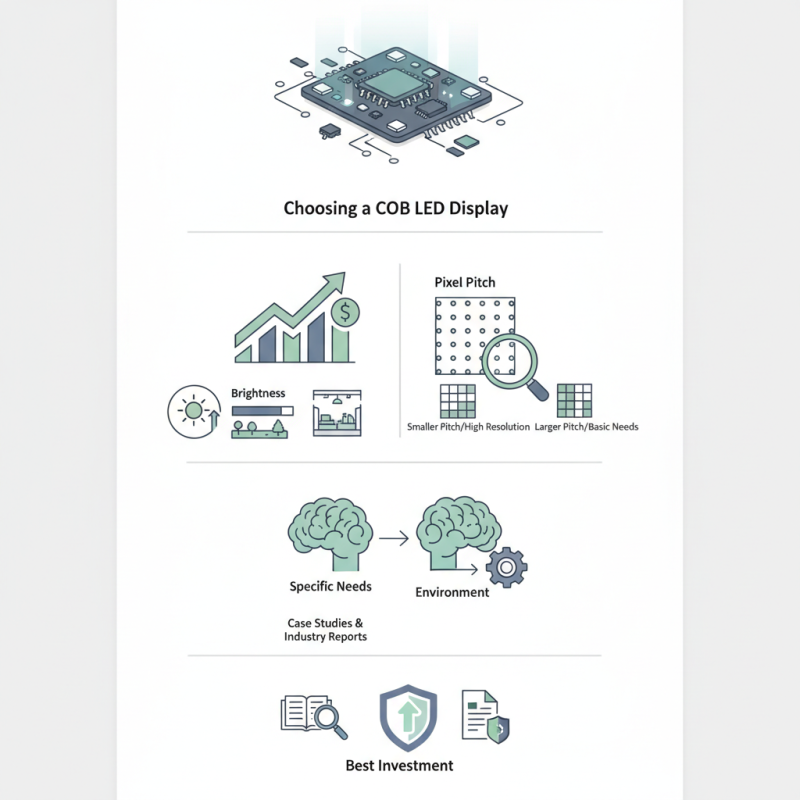
Choosing the right COB LED display is a crucial decision for businesses seeking to enhance visual communication. The global LED display market was valued at approximately $15.3 billion in 2020 and is projected to grow significantly. This shows the increasing demand for advanced display technologies. The popularity of COB (Chip-on-Board) LED displays has surged due to their high efficiency and superior image quality.
When considering how to choose the right COB LED display, various factors come into play. Brightness is essential, as it affects visibility in different environments. A display with insufficient brightness may not function well outdoors or in well-lit spaces. Additionally, pixel pitch deserves attention; a smaller pitch offers higher resolution, while a larger pitch may suffice for basic needs.
Potential buyers should reflect on their specific needs and the environment where the display will be used. Not all COB LED displays are created equal, and overlooking details could lead to poor performance. Examining case studies and industry reports can provide valuable insights. Ultimately, understanding how to choose the right COB LED display helps ensure the best investment.
COB LED technology, or Chip On Board LED, is transforming display solutions across industries. The unique arrangement of multiple LED chips on a single board provides superior performance. For instance, according to a report by MarketsandMarkets, the COB LED market is projected to reach $2.6 billion by 2025, reflecting its growing importance.
One key benefit of COB technology is its exceptional brightness. The high-density layout allows for intense luminance without excessive energy consumption. Some reports note that COB displays can achieve brightness levels exceeding 10,000 nits. This makes them ideal for outdoor advertising and large events. However, achieving this brightness often comes with challenges, such as heat management. Effective cooling systems are crucial for maintaining long-term performance.
Durability and lifespan are notable advantages. COB LEDs typically last 50,000 hours or more, significantly reducing replacement costs. However, users must consider the initial investment, which might be higher than traditional options. Yet, the long-term savings on maintenance can justify the upfront cost. Each project demands careful evaluation of display needs and environmental conditions.
When choosing the best COB LED display, several key factors come into play. One of the most crucial aspects is resolution. Higher resolution means clearer images. Think about where you'll use the display. Indoor areas may require less resolution than outdoor venues.
Another important factor is brightness. COB LED displays vary in brightness levels. If you plan to use your display in direct sunlight, opt for a higher brightness model. This ensures visibility at all times. Energy efficiency is also worth considering. COB technology usually provides good efficiency, but it helps to check specific ratings.
Tips: Test different displays before making a decision. What works for one application may not work for another. Pay attention to the color accuracy as well. Does the display represent colors faithfully? This might not be obvious at first glance. Keep in mind the space and budget. A well-planned choice can save you from future regrets.
When choosing a COB LED display, size and resolution are critical. The size directly influences visibility. Larger displays offer more screen real estate, making them ideal for large venues. For instance, according to a recent industry report, a 5mm pitch display is optimal for viewing distances of 5-10 meters. In contrast, smaller pitch displays, like 2mm, are better for closer viewing, enhancing detail and clarity.
Resolution also plays a significant role. Higher resolution displays deliver sharper images. A 4K resolution COB display has about four times the pixels of a Full HD display. This increase in pixels can make a substantial difference in visual quality. However, it also demands more processing power. Many users overlook this aspect, leading to performance issues. It's essential to balance your needs for clarity and the technical capabilities of your playback system.
In addition, the viewing angles of these displays can create challenges. While some offer 160-degree viewing angles, others lag behind. Poor viewing angles can lead to color distortion. A display’s refresh rate can also affect performance. Many professionals recommend a refresh rate of at least 60Hz for smooth playback, especially for video content. Neglecting these details could lead to unsatisfactory results.
When selecting a COB LED display, brightness and color performance are critical factors. Brightness, measured in nits, should match your intended usage. Displays used outdoors need higher brightness levels, typically around 5,000 to 8,000 nits. This ensures visibility in direct sunlight. Indoor environments offer more flexibility. However, displays above 500 nits are generally recommended for optimal clarity.
Color performance is another essential aspect. A display’s color gamut indicates the range of colors it can reproduce. Ideally, a good COB LED display should cover at least 90% of the NTSC color space. This wide color spectrum enhances the viewer experience, making images vibrant and true-to-life. Yet, achieving high brightness often compromises color accuracy. This is an ongoing concern in the industry.
Heat management also plays a role in performance. Poor thermal design can lead to color shifts over time. LED displays must balance brightness and color fidelity under varying temperatures. Reports suggest that displays maintaining stable color performance can last longer and provide a better return on investment. Therefore, carefully evaluating these specs is crucial for any purchase decision.
When assessing the cost-effectiveness of COB LED solutions, several factors come into play. Look at the initial investment and daily operational costs. While COB LEDs promise better brightness and efficiency, the price difference from traditional options can be significant. This may require additional budget consideration upfront, which many overlook. However, it’s crucial to analyze the long-term benefits they bring.
Longevity is another critical factor. COB LEDs often last much longer than standard LED displays. This means fewer replacements and reduced maintenance costs over time. A longer lifespan can lead to significant savings. Yet, some users report inconsistencies in performance as the technology matures. It raises important questions about reliability in various environments.
It's vital to reflect on your actual needs. What environment will the display be used in? Will it face weather elements, or will it stay indoors? Cost-effectiveness won’t only come from the price but also how well the display meets your specific demands. Assessing this balance may require time and careful thought, but it pays off.
| Parameter | Value A | Value B | Value C |
|---|---|---|---|
| Cost (USD) | $300 | $450 | $600 |
| Lifespan (Hours) | 50000 | 65000 | 80000 |
| Brightness (nits) | 1000 | 1200 | 1400 |
| Power Consumption (W) | 150 | 200 | 250 |
| Warranty (Years) | 2 | 3 | 5 |
: COB LED technology arranges multiple LED chips on a single board. This enhances overall performance.
Brightness affects visibility. For outdoor use, higher brightness levels are essential for effectiveness in sunlight.
Some COB displays can exceed 10,000 nits. This makes them suitable for advertising and large events.
COB LEDs typically last over 50,000 hours. This reduces costs on replacements over time.
Yes, the upfront costs can be higher than traditional options. However, maintenance savings may justify the expense.
A wider color gamut enhances vibrancy. Ideally, a display should cover at least 90% of the NTSC color space.
Yes, achieving high brightness can compromise color accuracy. This tension is a concern in display technology.
Good thermal design is essential. Poor heat management can lead to color shifts over time, impacting performance.
No, brightness and color performance should be balanced. Each project requires careful evaluation of specific needs.
Stable color performance and proper heat management contribute to a longer lifespan and better investments.
When considering how to choose the right COB LED display, it's essential to understand the fundamental technology and its advantages, such as improved energy efficiency and superior image quality. Key factors that influence your decision include the display’s size, resolution, brightness, and color performance. A thorough comparison of these elements will help you identify the display that best matches your specific requirements.
Additionally, evaluating the cost-effectiveness and longevity of COB LED solutions is crucial for making a smart investment. By analyzing these criteria, you can ensure that you select a COB LED display that not only meets your immediate needs but also provides a sustainable solution in the long run. Ultimately, taking the time to understand these components will guide you toward the ideal COB LED display for your application.
Aras LED